
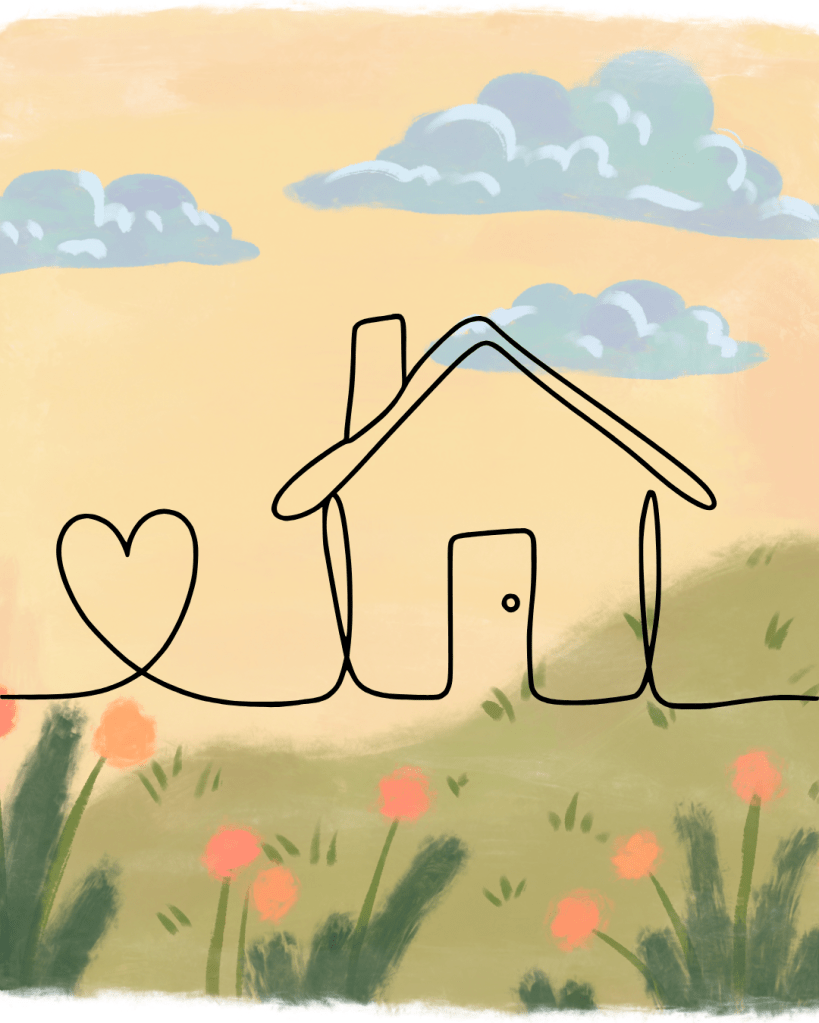
Welcome home!
But wait, what does ‘home’ look like or feel like?
Ever wondered what the answer to these questions would be if you were to ask a child?
What does ‘home’ mean to your child? What picture forms in their minds when they hear the word ‘home’? What feeling does it evoke? As they walk the familiar path and approach the door, are they jumping excitedly, or are they slumped over, filled with dread?
Home is never just a structure, it is a child’s first emotional classroom. It is first a person, people, before it is associated with a place. It is the earliest environment where a child begins to learn what the world feels like and what they must do to survive in it. It is the first place where you get the chance to equip them with the mental and emotional tools that will carry them through life.
Reflection: Take a minute to reflect on some of the habits you have today, albeit unconsciously, so that you can trace back to how your home environment was run as a child. Whether it is a strict glass of water you absolutely have to have just before bed that helps you feel safe, or a style of sweater you subconsciously pick out every time that reminds you of someone dear.
Home means something to everyone.
Home is where a child first learns whether or not they are wanted. Whether their feelings are safe to express, the concept of consequences, how emotions are managed and responded to, what plenty or lack means, and how it influences existence, and how to handle mistakes.
Home is where the foundation for emotional security is first laid.
Long before organised learning begins in a classroom, before daycare or school. Unlike formal education, these things are rarely taught through direct instructions but rather through observation, repetition, and experience. Every interaction becomes important. They see patterns. When adults respond to their emotional expressions with ridicule or punishment, they learn to misinterpret their feelings and to hide or suppress them.
Every interaction matters.
Now, as an adult reading this, pause for a moment. Who did you first associate ‘home’ with, warm or not. Where was your first memory of ‘home’.
How you feel right now, remembering these things, that emotional response is the experience a child is forming today.
And now it is our turn.
Our turn to be intentional.
Our turn to reflect.
Our turn to do our best to ensure that when a child thinks of home, what comes to mind are memories rooted in safety, connection, and emotional stability.
Because home is not just where a child lives,
It is where they learn who they are allowed to be.
 WellChildHub
Leave a comment